 Price isn't everything: why customers buy knowing someone is cheaper
Most business owners think customers compare on price alone. Price is one of six things they weigh — and you are ignoring the other five.

Every video and article, written out in full and grouped by topic. Free, no sign-up.
115 pieces
If you set your price by looking at a competitor, you are not pricing — you are following. This series is about setting your price and understanding your competition without entering a price war you cannot win.
Price isn't everything: why customers buy knowing someone is cheaper
Most business owners think customers compare on price alone. Price is one of six things they weigh — and you are ignoring the other five.
 Don't compete on price — compete on value, focus and service
If you are just starting, competing on price is the fastest way to close. Three other arenas you can win in while you are still small.
 "We have the best price and the highest quality" — the line that loses you customers
When you claim to be both the cheapest and the best, the customer does not believe you. How to pick one promise and defend it.
 You definitely have competitors — even if nobody sells your exact product
A competitor is not whoever sells what you sell; it is anyone solving the same problem for the same people. How to find them before they take your customer.
 Not everything your competitor does needs copying
They launched an offer, opened a branch, joined TikTok — and you ran after them. When copying is right, and when it just burns your money.
 No business has zero competitors: direct versus indirect
Not everyone in your field is a competitor, and not every competitor is in your field. How to map your competition properly and stand out instead of imitating.
 Pepsi versus the juice shop: your competitor is not who you think
Pepsi does not only compete with cola — it competes with anything a person might drink. This example changes how you see your whole market.
A short series for business owners who want to grow without an advertising budget.
 How do you grow your business without ads? Start with events
With no ad budget, events and conferences can bring you better customers than any campaign. How to pick the right event and leave it with real prospects.
 Direct LinkedIn outreach: how to grow without ads
LinkedIn gives you direct access to decision makers with no ad budget. The difference between the message people reply to and the one that gets deleted.
 Ask your network for help — the cheapest growth channel you have
The people who already know you are the fastest source of new customers, but most owners never ask. How to ask without being a burden.
 You don't have to be the one selling — a partner can sell for you
If selling is not your strength or you have no time for it, there is another model: someone else sells your product to their customers. How to pick the partner and set the agreement.
 Who should you partner with? The right partner helps you grow fast
The right partnership saves you years; the wrong one costs you time and reputation. The criteria to judge by before you agree.
A budget is not a number you state at year end — it is a decision that shapes how you grow. This series covers how to size your marketing budget, know what you are paying for, and hold people to results.
 How do you set a marketing budget? The method that works for small companies
A percentage of sales? Whatever is left after costs? Both are wrong. How to build a budget from a real sales target.
 Plan your costs before marketing — before you buy a pound of advertising
Most small-company campaigns fail not because of the ad, but because the costs behind it were never calculated. What has to be worked out first.
 Don't cut marketing in half — next month pays the price
The moment things tighten, the first line cut is marketing. Why that looks wise and turns out to be the most expensive decision of the year.
 Hold people to results or to method — not both
If you manage a marketing team or an agency, you have to choose: give them freedom and judge the numbers, or set the method and judge the execution.
 More profit doesn't always mean more customers
The first idea when you want to earn more is to get more customers. There are five faster and cheaper routes, and all of them are within your control.
If you are about to pay an agency or build a marketing team, this series will save you money and a wasted year.
 Listen to this before you sign with a marketing agency
Most owners pick an agency on the pitch deck and the price. The questions to ask before you sign, and the signals that should stop you.
 An agency is not supposed to write your business plan
There is a difference between a marketing plan and a business plan. Handing the big decisions to an agency gives them a job that is not theirs, and you pay for it.
 How do you choose a marketing team? And when to hire in-house instead of an agency
Your first marketing hire shapes the next two years. The right order of roles, and who needs an in-house team versus an agency.
 There is better work out there — how to tell what you're getting is below standard
Many owners are used to mediocre work because they have never seen better. Simple signals for judging the level of whoever works with you.
 Social media packages: what exactly are you paying for?
Twelve posts a month is not a service. How to read a social media proposal and tell whether it fits your business.
Before the ads and the content, there are decisions that shape the whole business: who you are in the market, what you promise, and how you measure growth. This series is about those decisions.
 How do you write a brand positioning statement for your company?
One sentence that settles who you are in the market and makes every marketing decision after it easier. How to write it, and the mistakes that empty it of meaning.
 Don't rebrand — before you answer these questions
Business is down so we change the logo and the colours. Why that is the most expensive and slowest fix available, and when a rebrand is genuinely right.
 What is the marketing mix — 4Ps and 7Ps?
Marketing is not only advertising. The four elements every marketing decision falls under, and the three added when you sell a service.
 Making the logo bigger doesn't matter — people don't buy because of logo size
The most common note a business owner gives on any design. Why it is not what makes the difference, and what to focus on instead.
 Process matters if you want to change your position in the market
The decision alone is not enough. To move up-market, internal operations have to change before the message does.
 What growth means in marketing — not every increase is growth
Rising sales are not always growth, and sometimes they are the start of a problem. How to define growth in your company and measure it properly.
The argument between marketing and sales costs small companies more than any competitor. This series is about the relationship between them, and about the customer you should actually be selling to.
 Is marketing more important than sales? The question itself is the problem
Small companies pick one and neglect the other, then blame both. The exact difference between them, and how to make them work together instead of fighting.
 You don't have to sell to Class A — the priciest segment is not the most profitable
Every company wants to serve the top tier. Why that is the hardest and most expensive market, and why other segments may be your real opportunity.
 What do you do when people stop buying from you?
Sales stopped suddenly, and the first reaction is a discount or more advertising. The right order of diagnosis before you spend a pound.
 Tell your customer about your problems — they might help you solve them
Companies hide their problems from customers to protect their reputation. Measured honesty earns trust, and sometimes produces solutions.
 Your opinion doesn't matter — the customer decides
Most marketing decisions get made on the owner's taste. Why that is the riskiest source of decisions, and the practical alternative.
 What is the one method that brought you the most customers?
The question most owners never ask themselves. How to find your real source of customers and double it instead of spreading your effort thin.
Seasons and new markets are the two biggest opportunities small companies miss. This series is about both — Ramadan, and expanding into Saudi Arabia.
 Should you sell in Ramadan? How to decide two months out
Ramadan is not a season for every business. How to know whether your product is worth spending on, and what to do instead if it is not.
 Don't post about the Ramadan TV dramas!
Small companies waste the season's budget on content imitating big-brand advertising. Why that does not work, and what works instead.
 Should I sell in Egypt or in Saudi Arabia?
Prices in Saudi are higher — so are costs and competition. The criteria for deciding where to spend your effort next year.
 You don't have to sell in Saudi Arabia!
Expansion is not proof of success in itself. When deepening your current market beats opening a new one.
 Why does every koshari shop sell rice pudding?
A complete marketing lesson inside a koshari shop: how to raise the value of an order from the same customer without spending a pound on advertising.
If you are entering the field or already in it: the jobs that actually exist, the difference between digital and traditional, the price of proper work, and where AI fits into all of it.
 The different jobs in digital marketing and how to start working in them
The field is not one job, it is more than ten roles with completely different skills and temperaments. A practical guide to choosing one and starting.
 Is digital marketing better than traditional marketing?
The question is asked as if one answer is correct. The real differences, and when traditional still beats digital in the Egyptian market.
 There are no stupid questions, only stupid answers
Fear of asking costs companies and individuals more than any mistake. Why the obvious questions expose the biggest problems.
 "So we shouldn't work?!" — proper work has to be paid for
Plenty of requests arrive with a budget that cannot cover decent work. How to handle them without losing yourself or the client.
 What's wrong with AI?! — it can be a marketing solution
Between those who think it will take every job and those who reject it entirely, there is a practical use that saves small companies real time.
The TikTok marketing and advertising course in six parts, the free website course with Google Sites in two parts, and the steps to plan a social media campaign from scratch — all written out step by step.
 TikTok marketing and advertising course — Part one: where to start
The basics of marketing on TikTok: why the platform matters for your business, and how to build a real presence for your brand from day one.
 TikTok course — Part two: the platform as a growth channel, not a page
How to use TikTok as a strategic plan to reach a wider audience, and present your products creatively in a way that grabs attention instantly.
 TikTok course — Part three: producing content and the platform's tools
TikTok does not require the filming polish other platforms do. The tools inside the app and how to produce good video with a phone.
 TikTok course — Part four: a double-edged sword
The platform spreads things fast — good and bad. Why the product must be real and the content distinctive, and how to avoid the harm of rapid spread.
 TikTok course — Part five: advertising from inside the app
How to run your first paid ad on TikTok directly from your phone, and set a budget without wasting money.
 TikTok course — Part six: the ads platform and advanced options
The difference between promoting from the app and the ads platform, and how to build a full campaign with objectives, audiences and budgets.
 Build a free website with Google Sites — Part one
What Google Sites is, its advantages, and the steps to build your first site with no technical experience at all.
 Build a free website with Google Sites — Part two: customising and publishing
How to customise the look of your site, add forms and maps, publish it online and connect your own domain.
 How do you plan a successful social media campaign from scratch?
Success is not luck. Four clear steps to build a campaign: set the goal, know the audience, plan the content, and execute and track.
Posting everywhere is not success. This series is about picking the right platform, generating a steady flow of content ideas, and using your employees and customers as the strongest marketing tool you have.
 How do you choose the right platforms for your business?
Not every platform suits every business. A practical way to choose your place instead of spreading your effort across five dead pages.
 Random posting won't get you there — being everywhere is not success
Posting all over the place and waiting for results? Three simple questions that lead you to the right choice and save your time and money.
 Out of social media ideas? How to generate content that inspires your followers
Feeling like your mind is blank and you cannot write a post? Simple steps to generate fresh ideas daily from sources you already have.
 How did "B Laban" take over social media using its employees? The EGC secret
A simple, highly effective marketing move: using its own staff as the content source instead of spending millions. How to apply it to your business.
 What is evergreen content — the content that keeps working for years
Most of your content dies in two days. This type keeps bringing visits and customers for years. How to make it and how to maintain it.
 How do you sell a new product on social media?
Most new products launch in a single day and die the same day. A simple launch plan in three stages.
 Influencers or reviewers? And stronger than both: your own customers
Amid the noise of advertising, there is still a powerful and free method — word of mouth. How to turn your customers into brand ambassadors.
How you know your customer, how you keep them, and how you present to them. This series is about the part that happens between the product and the sale — the part that decides the result.
 Should I grow the business or look after my existing customers?
Every month you choose between winning new customers and caring for the ones you have. How to split your effort by calculation rather than instinct.
 What is the best thing your customers say about you?
The answer to that question is your marketing message, already written in the customer's own words. How to collect it and use it.
 Know your customers: when you try to please everyone you usually reach nobody
Five practical steps to know your audience: market research, data, listening, building a buyer persona, and testing.
 Want more sales? Change how you present, not your product!
A strong product alone is not enough. How the way you present it makes the customer say: this is exactly what I was looking for.
 Define your USP — the thing nobody does the way you do
In a market full of competitors, being good is not enough. Four steps to discover your real point of difference.
 The most maddening question in business
"What do I do to grow?" — impossible to answer as asked. The questions you should be asking instead.
The concepts every marketing decision rests on: what a brand actually is, what promotion means, and the difference between marketing goals and business goals.
 A brand is not just a logo — it is how people feel about you
Branding is not a logo, a product or a service. It is what lives in people's minds when your name comes up, and four steps to build it.
 Digital marketing goals are not always the same as business goals
Confusing the two can cost you a lot. The difference between them, and how to define your real goal for digital marketing.
 The basics of the 4Ps marketing mix — and the harmony between them
Four elements that, when they work together in harmony, raise a business's chances of success considerably. And how any contradiction between them stops the sale.
 What does promotion mean? — far more than ads and discounts
The moment people hear "promotion" they think of advertising. Promotion is how you speak to your audience and build trust, in five steps.
Most disputes between companies and whoever works with them come from wrong expectations about time and results. This series sets out what actually happens, and when.
 Ads don't deliver in B2B — there may be another way
If you sell to companies and your ad spend is not returning, the problem is not the ad. The methods that actually work in this market.
 Ads don't work from day one
Most campaigns get switched off after two days because the result did not arrive. What actually happens in that period and why patience is part of the plan.
 Does SEO take 6 months?
That number gets repeated as if it were a rule. What actually happens in those months, and what can show up in weeks.
 Why don't we take a percentage of the ad spend?
A widespread pricing model with an obvious conflict of interest. Why refusing it is in the client's favour, and the fairer alternatives.
 When should you not do digital marketing for your company?
There are situations where spending on digital marketing is the worst decision you can take. Six of them, and what to do instead.
 Who is the best digital marketer in Egypt?
A question asked often whose answer is not a name. How to choose the right person or agency for your business specifically.
 3 reasons your company needs a website
In the age of social media, why do you still need a site? Three practical reasons, and how to start at the lowest cost.
If you are in the field or thinking of entering it: where to learn, which courses are worth it, and how to turn what you learned into real work — plus a five-part series on starting out step by step.
 Learn digital marketing for free — a plan instead of going in circles
Everything you need is available free online. The problem is not the sources, it is the order. A free learning plan with a clear sequence.
 Are free marketing courses worth it? How to choose one
Free courses with certificates from big names are everywhere. Which kind actually helps, how to pick from the pile, and when a free course is just a way to feel productive.
 Where to take a digital marketing course — how do you choose?
Online, a training centre, a university, or learning on the job? A practical comparison of the options and who each suits.
 What do you do after learning digital marketing from videos?
Watched dozens of videos and still feel unable to work? The steps that turn watching into skill.
 Digital marketing courses — how to choose one worth your money
Before paying for any course, six signals that separate a course that raises your level from one that wastes your time and money.
 Why don't courses change your life?
Some people collect courses like medals; others use every piece of information as a step forward. The difference between them is one question.
 How to start in digital marketing — Part one: understand the field
Before any course, you have to understand what the field is made of and what paths exist. The first step in a five-part series.
 How to start in digital marketing — Part two: build your foundation
Having chosen your path, how to build a solid foundation in three months without scattering across a hundred sources.
 How to start in digital marketing — Part three: your first project
How to find a real project to work on while still a beginner, and how to run it without falling into the most common mistakes.
 How to start in digital marketing — Part four: build your portfolio
Certificates do not get you hired, documented work does. How to turn your projects into a portfolio that makes someone say yes.
 How to start in digital marketing — Part five: the first opportunity
How to find your first job or first client, and what to focus on in year one so you progress quickly.
The channels that work while you sleep: automated messages that follow up with the customer, and bots that answer the recurring questions. This series is about building them without complicating your business.
 Why do companies spend more than a billion dollars on chatbots?!
That number is not a fashion. Three economic reasons companies invest in automated replies, and what matters to you as a small business.
 Types of chatbot — and which one suits your business
Not all bots are the same. The difference between a simple and an intelligent bot, and which one actually solves your problem.
 Building a chatbot on Chatfuel — Part one
Practical steps to build your first bot with no coding: connecting it, building the conversation, and testing before it goes live.
 5 reasons to use email automation
Email is not an old channel, it is your cheapest and highest-returning one. Five situations where automation genuinely makes a difference.
 How do big stores remind you to complete a purchase?
You left the product in the basket and left, and hours later a reminder arrived. How abandoned cart messages work and how to build them in your store.
 Email automation process — Part one: planning
Before you open any tool, how to plan an email journey: the trigger, the goal, the messages, and the timing.
 Email automation process — Part two: execution and improvement
After planning: how to build the journey in the tool, test it, measure it, and improve it gradually.
 Email marketing funnel — Part one: building the list
The funnel starts with a list. How to collect emails cleanly, and what to offer that makes someone hand over their address.
 Email marketing funnel — Part two: building the relationship
After someone signs up, what happens? The welcome sequence and how to build trust before you ask for anything.
 Email marketing funnel — Part three: conversion and measurement
How to turn a list into sales without burning it, and which numbers tell you the funnel is working.
Longer written guides on digital marketing and social media.
 Empowering SMEs with JICA and MSMEDA: Strategic Marketing and Growth Initiatives at the Marghem Complex
The collaboration between JICA, MSMEDA, and myself, alongside my co-consultant Dr. Lamees Koura, on the project "Improving the Business Competitiveness of MSMEs through Enhancement
 Google Sites: A 2-Step Comprehensive Guide with Video Demos
In the realm of website creation, Google Sites emerges as a remarkably user-friendly and versatile tool, offering individuals and businesses a streamlined approach to designing and
 Social Media Advertising: A Comprehensive Guide in 5 Minutes Read
Social media advertising has become a cornerstone of marketing strategy for businesses worldwide. Its strategic importance cannot be overstated, as it offers a unique blend of reac
 Guaranteed Universal Ways to Go Viral on Social Media: 5 Minutes Read
In today’s fast-paced digital world, going viral on social media can seem like the Holy Grail for content creators, marketers, and businesses alike. But what separates viral conten
 Choosing the Right Platform to Master your Advertising Journey: 4 Pillar Points
Social media advertising presents a vast landscape filled with diverse platforms, each promising a unique path to connect with your target audience. But with so many options, navig
 The Importance of Twitter, LinkedIn, and TikTok in Social Media Marketing
In the ever-evolving landscape of digital marketing, social media platforms like Twitter, LinkedIn, and TikTok have emerged as powerful tools for businesses looking to expand their
 9 Practical Social Media Marketing Guide: Strategies for Engagement and Growth
In the digital era, social media marketing is not just a tool; it’s a vital strategy for connecting with audiences and expanding your brand’s reach. This comprehensive guide offers
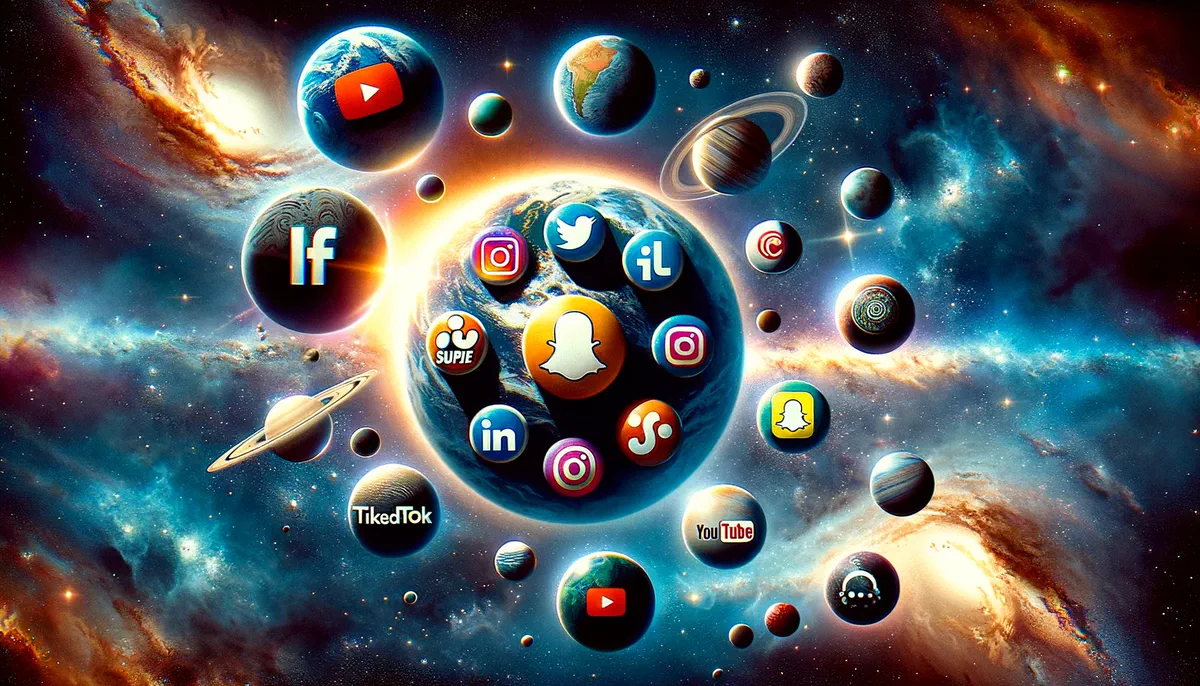 Exploring Social Media: A Space-Themed 7 Points Guide to Digital Marketing: Master it Now
In the vast expanse of the digital universe, social media marketing is like exploring uncharted galaxies. Drawing inspiration from "Day 02 Social Media Marketing," let’s take a jou
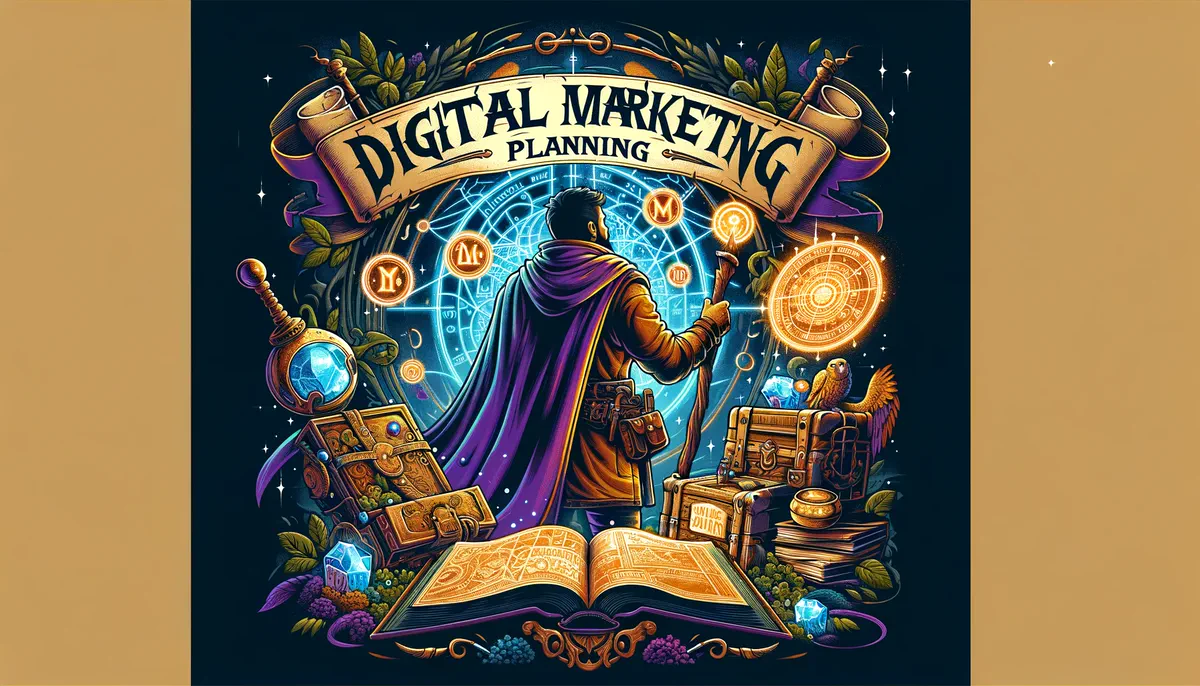 A Medieval-Themed 5 Points Guide to Digital Marketing Mastery: Guaranteed
In the age of digital kingdoms, the art of digital marketing mastery is akin to navigating uncharted territories with the wisdom of ancient maps. Your business, the thriving kingdo
 10 Free Digital Marketing Courses With Certificates (2026)
Ten free digital marketing courses with certificates — Google, HubSpot, Moz, Hootsuite and TikTok — and which two or three are actually worth your time first.
Book a free consultation and we will start from whatever is blocking you now.
Book a free consultation
The social media reality check
See all →Social media is not a sales button, and not every business needs it in the same way. This series separates what gets said from what actually happens for small companies.
Plenty of companies open pages, pay for content, and sales do not move. Usually because the real problem sits somewhere else entirely.
Most companies budget for ads and assume the rest takes care of itself. In reality most of the cost of social media is not money.
Ten thousand followers does not mean sales. How to know which follower is worth having, and what to measure instead of the big number.
Fame is not a condition for success, and sometimes it distracts you from the work. The difference between being famous and being the name that gets recommended in your field.
There is a new trend every week and every company runs after it. When a trend is worth it, and when it leaves your brand shapeless.
Companies start with enthusiasm and stop after a month. Why regularity beats creativity, and how to build a system you can sustain.
The ad brings enquiries and the page is full of messages, and still no sales. The five most common causes and how to fix them.